How Esports Tournament Brackets Work: Single-Elim, Double-Elim and Swiss
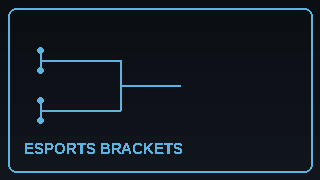
If you’ve ever watched an esports bracket and wondered why some tournaments knock a team out after one loss while others let them lose twice, or why some events don’t have a visible “bracket” at all for the first few days, the answer is format: single elimination, double elimination, Swiss, and round robin each solve for a different trade-off between speed, fairness, and how harshly one bad map or game is punished.
Last checked: November 2026.
On this page
- Single elimination
- Double elimination
- Swiss system
- Round robin
- Why seeding matters as much as format
- FAQ
Single elimination
Single elimination is the simplest format: lose once, you’re out. Every round halves the field, so an 8-team bracket finishes in 3 rounds and a 16-team bracket in 4, which makes it the fastest format by a wide margin and the easiest to follow on a broadcast.
- Upside: short, high-stakes, and easy for spectators to track — every single match matters.
- Downside: a strong team can be eliminated by one bad game, a server issue, or a single unlucky matchup, with no way to recover. Many viewers consider this the format’s biggest fairness problem, especially in best-of-one rounds.
- Common use: LAN finals, play-in stages, and any event where total match count has to stay low.
Double elimination
Double elimination fixes single elimination’s harshest flaw by giving every team a second life. The bracket splits into an upper bracket (sometimes called the winners’ bracket) and a lower bracket (the losers’ bracket):
- A team that loses in the upper bracket drops into the lower bracket instead of being eliminated.
- A team is only fully eliminated after a second loss.
- The lower-bracket winner eventually meets the upper-bracket winner in the grand final — and because the lower-bracket team has already lost once, some events require them to win twice in the grand final (a “bracket reset”) to be fully even with a team that never lost.
This is the standard format for most major Dota 2, CS, and fighting-game tournaments because it rewards consistency across more games while still giving one true mistake room to recover from.
Swiss system
The Swiss system, borrowed from chess tournaments, replaces a bracket with a set number of rounds where teams are paired against others with a similar record — winners tend to play winners, losers tend to play losers, rather than everyone facing a fixed, predetermined opponent.
- No one is eliminated after a single loss; teams usually need to reach a set number of losses (commonly 3) to be knocked out, and a set number of wins (commonly 3) to advance.
- Every match stays meaningful for more of the event, since records stay close for longer than in a straight elimination bracket.
- It needs more total rounds than single elimination for the same field size, which is the main trade-off for its added fairness.
Valve’s Major format for CS popularized Swiss at scale in esports, and it has since been adopted by several other competitive scenes for their group stages.
Round robin
In round robin, every team plays every other team once (or twice, home-and-away style), and standings are decided by total record rather than bracket position. It’s the fairest format in the sense that results aren’t affected by bracket luck or seeding — but the number of matches grows quickly as more teams are added, which is why it’s mostly used for smaller groups (4–6 teams) feeding into a playoff bracket, rather than for an entire large tournament.
Why seeding matters as much as format
Whichever format an event uses, seeding — the process of placing teams into the bracket based on ranking, qualifier results, or regional strength — has a huge effect on how fair the event feels. Poor seeding can put two of the strongest teams in the world against each other in an early round regardless of format, while good seeding tries to keep the strongest teams apart until later rounds. This is also why upsets in the first round of a single-elimination bracket can feel so consequential: a mis-seeded top team can be gone before the event has really started.
If you’re trying to follow or predict a bracket, understanding the format first and the seeding second is usually the fastest way to make sense of what you’re watching. Our guides section covers more practical, format-agnostic tips for following competitive play, and our breakdown of fixing FPS drops is useful if you’re trying to practice at a consistent frame rate before an online qualifier.
FAQ
Why do some tournaments use best-of-one and others best-of-three?
It’s a trade-off between fairness and time. Best-of-one rounds are faster but let one unlucky map or round decide a whole series; best-of-three (or longer) reduces variance by letting a team recover from one bad map, at the cost of significantly more broadcast time.
What does a “bracket reset” mean in double elimination?
It means the lower-bracket finalist, having already lost once, beat the upper-bracket finalist in the first grand-final game — but since the upper-bracket team hasn’t lost yet, some formats require a second, deciding match (the “reset”) so both finalists are competing on genuinely even terms.
Is Swiss format the same as round robin?
No. Round robin has everyone play everyone; Swiss pairs teams dynamically round-by-round based on current record, so two teams with very different records are unlikely to meet, and the total number of matches is far lower than a full round robin with the same number of teams.
Can a lower-seeded team still win a bracket?
Yes — seeding affects the path a team takes through the bracket, not the outcome of individual matches, so upsets happen in every format. Double elimination and Swiss formats give a strong but mis-seeded team more chances to recover from one early loss than single elimination does.
Spotted an error or have a correction on how a specific event ran its bracket? Use our contact form to send a tip — we check and update guides like this one when formats or rules change.
Sources: format descriptions cross-checked against start.gg’s guide to tournament formats and start.gg’s bracket setup documentation (accessed November 2026).

Gamer Heroz Editorial Team
The Gamer Heroz Editorial Team writes and fact-checks the site's guides, reviews, and hardware notes. We play the games and test the gear we cover, and correct our own mistakes in public when a reader flags one.
Related reading
Mechanical Keyboard Switches Explained: Linear vs Tactile vs Clicky
Linear, tactile and clicky switches feel and sound different because of one mechanical detail: whether the stem travels in a straight line or rides over a bump. Here's what that means for gaming and typing.
Why Your FPS Keeps Dropping (And How to Actually Fix It)
Random FPS drops almost always trace back to one of five causes: thermal throttling, background load, driver or overlay conflicts, a CPU/GPU bottleneck, or storage stutter. Here's how to find which one is yours.